
In the summer of 1994, American Airlines had a sale on Caribbean vacation packages. They were advertised at 33 percent to 50 percent off for travel before Thanksgiving 1994.
I booked a trip for November for seven nights at the Sonesta Beach Resort and Casino Curacao, roundtrip airfare from Baltimore-Washington International Airport, and transfers to and from Hato International Airport in Curacao. I also purchased, as is my custom, trip cancellation insurance from American. The package came to $1,400 for both of us, which I considered to be a major bargain.

Two days before we were to depart, my mother slipped on leaves in front of her new house and broke her ankle. She at first insisted that I take the trip alone, but because I had the cancellation insurance, I postponed the trip for six months. It took three months and several calls from my travel agent, but American reimbursed me for the entire cost of the trip. I rebooked for travel in May 1995, but the sale was long over and the trip cost $2,000.
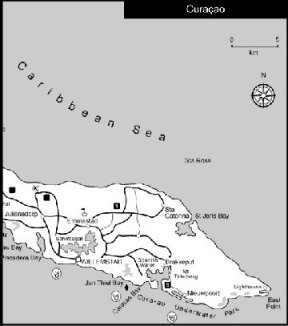
Curacao is a more desert-like island than many others in the Caribbean. It is flat and arid, the plants are mostly cacti and divi-divi trees, bent from the constant trade winds. The island is 800 miles from the equator and is part of the Netherlands Antilles. It is fairly large, at 38 miles long, and 2 miles to 7 miles wide. An oil refinery provides industry. The residents speak Dutch, English, Spanish and Papiemento.
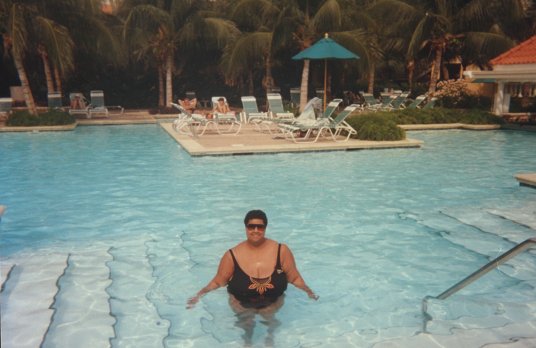
The Sonesta was the newest and fanciest hotel on Curacao. (As of this writing, the property is owned by Marriott.) It is a beachfront hotel with three stories and has an open-air lobby. The lobby is 20 steps above the wonderful pool, which is a series of rectangles and gently sloped steps that make for easy access and egress. A swim-up bar and lounge chairs are arranged under the many palm trees. There is also a Jacuzzi at the other end of the hotel.
The beach at the Sonesta is rocky; pebbles and stones make walking in bare feet difficult. However, at the end of the property, adjoining another hotel, is a sandy beach and cove, protected from waves by huge rocks. Pelicans gathered on the rocks and I was able to swim close to them. Also, many fish swim there, and my mother and I went snorkeling there almost every day.
The hotel has a few shops selling jewelry, perfume and beachwear, as well as a sundries shop. There is a watersports shack, from which we could book scuba lessons, snorkeling and sailing trips, and rent equipment and floats. There is a paved walkway along the beach from the hotel to the oil refinery, about two miles. It is level and made for a nice, scenic way to get exercise, with views of the sea.
The Sonesta has three restaurants. The Palm Cafe is outdoors overlooking the pool. Diners are amused by tiny birds called "sugar thieves," which fly down to the tables, snatch packets of sugar, then perch overhead to tear open the packets and eat the sugar. The Palm Cafe is the only restaurant on the property that served breakfast and lunch. The Sonesta is rather isolated on the island; except for the hotel next door, there are no shops or restaurants for miles. If you don't rent a car, you're stuck at the Palm Cafe for breakfast and lunch. Breakfast was a buffet of eggs, bacon, sausages, cereals, breads, pastries, yogurt and fruit. Lunch was burgers, fries, salads and sandwiches. The Palm Cafe also had theme dinner buffets.
The other restaurants offered dinner. Portofino served Northern Italian food; Emerald Grille was billed as a "classic American steakhouse." Both restaurants are fairly fancy and expensive, with superb food.
In addition to snorkeling off the beach at the hotel, we took two half-day snorkeling trips. The first was organized at the hotel's watersports shack. My mother and I and four other guests were driven in a small van to Porto Marie beach. It was rocky for several yards, and made for treacherous walking in fins before we got into water deep enough to swim in. However, the snorkeling was terrific. Our guide led us along the far edge, where we saw hundreds of fish and coral. We swam along the edge for about a quarter-mile -- this was not a trip for the out-of-shape. The water was warm and clear and we had the entire site to ourselves. But this was a real roughing-it trip. There was no place to change, no toilet facilities, and our guide provided us with only a few sodas for refreshments.

The other trip embarked from the Seaquarium dock. We boarded a catamaran called the Vira Cocha with about two dozen other passengers. The sail out to the dive site was rough, as our captain had warned. We sat on the sides and were soaked by the time we arrived at the protected underwater national park. The crew threw bread crumbs into the water, and hundreds of fish swarmed around us for 45 minutes.
We visited the Seaquarium, which has 46 tanks of fish and an outdoor, beach-like area with seals, sharks and stingrays. The seals perform several times a day.

We took an interesting half-day island tour. This included drives across the huge pontoon bridge and around the island. We also visited the Hato caves, which were fascinating. It is a steep climb to get to the entrance, and it's beastly hot and humid inside, but the caves are amazing. We saw a colony of sleeping bats.
We took a trip downtown, walked across the pontoon bridge, and shopped. While downtown we visited Mikve Israel-Emanuel Synagogue, the oldest continuously operating synagogue in the Western Hemisphere.
[email protected]







